Zach Marconi’s Death
Nine Perfect StrangersZach Marconi’s death by suicide is the defining loss in the Marconi family’s story and a recurring source of grief, guilt, and unanswered questions. Told through memories and later disclosures, it is not presented as a death whose causes can be settled: Napoleon returns obsessively to one decision he believes might have changed events, while Zoe resists familiar consolations and explains why her family has struggled to speak openly about what happened.
Background and the last day
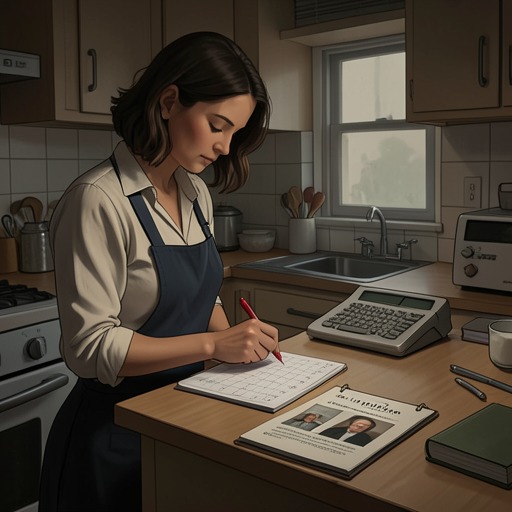
Three years before the family’s stay at Tranquillum House, Napoleon remembers a final ordinary day with Zach. The previous night, Napoleon and Heather had been together; the following morning, Napoleon intended to go paddling. Zach was at breakfast, shirtless, and joked that there was no milk because he had drunk it all. He mentioned that he might join his father for a paddle the next day.
The day continued with ordinary family activities. Napoleon worked in the garden and cleaned the pool; Zach went to the beach with his friend Chris. Later, father and son ate ribs, swam, and talked about tennis, Serena Williams’s chances at the Australian Open, conspiracy theories, and Chris’s specific plan to become a gastroenterologist. Zach, by contrast, did not know what he wanted to do next. Napoleon remembers reassuring him that there was time to choose a career and that people could have more than one career in their lives. They played table tennis, watched The Royal Tenenbaums, and stayed up late. These remembered details give the impending death its terrible contrast: a shared evening that, at the time, belonged to no visibly exceptional farewell.
Napoleon’s counterfactual and the discovery
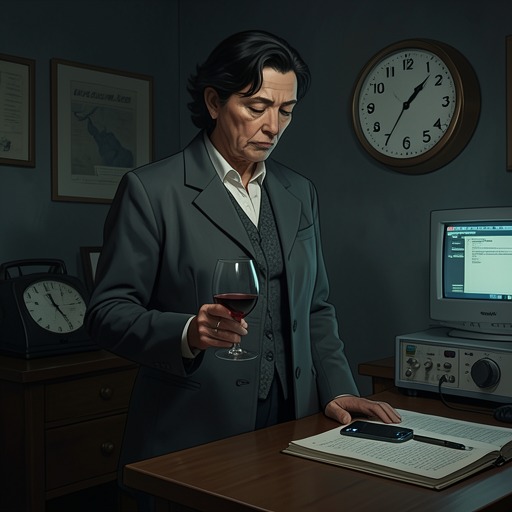
Napoleon identifies his decision to press the snooze button on his phone as the moment he will regret for the rest of his life. He had planned to rise earlier, but after staying up late he was tired and delayed getting out of bed. Again and again, he replays the movement of his thumb toward the alarm and imagines an alternative in which he gets up, goes to Zach’s room, and invites him paddling.
Heather found Zach. Napoleon remembers hearing her scream and running upstairs, an experience that seems to him to stretch into an unreal length of time. Zach had used a new brown leather belt to die by suicide. Heather had bought the belt for him for Christmas only weeks before; Napoleon remembers its R.M. Williams label, its price of ninety-nine dollars, and his own remark that it was expensive. In retrospect, an ordinary gift becomes inseparable from the death, one more detail that Napoleon repeatedly examines.
Zach left no note, text, or explanation. The absence of a message means his family cannot ask him what led to the decision or receive an account from him afterward. Napoleon’s recollection that he had told Zach to think before acting therefore becomes especially painful: it sits beside the fact that Zach left no explanation, not as an answer to why he died but as a reminder of how little his father can know.
Grief, responsibility, and what remains unknowable
Napoleon treats his memory like evidence in an investigation, revisiting the day and checking whether he has recalled it correctly. He imagines that if he had not delayed, Zach might still be alive and the family might not have been broken by the loss. The counterfactual is emotionally powerful, but the narrative does not establish that a morning paddle would have prevented Zach’s death. It shows instead how Napoleon’s grief turns one small, identifiable action into a possible point of control over an event whose causes remain beyond his reach.
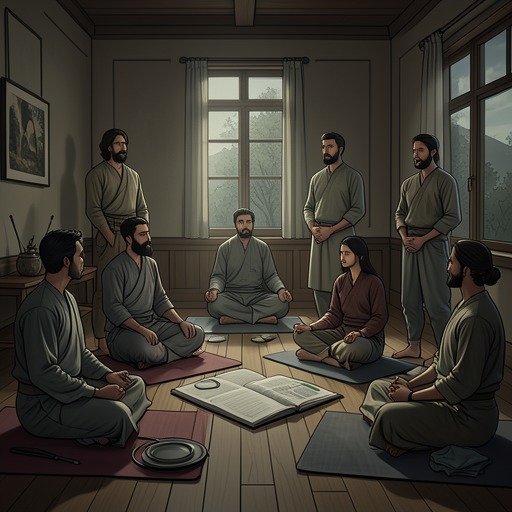
The story places that private self-blame alongside Napoleon’s public efforts to support other bereaved parents. At a Tuesday-night group, he tells them that research suggests some teenage suicide attempts follow short periods of suicidal thought, and that impulsive decisions may be involved. He withholds other findings and examples, including the possibility that interruption or removal of a means can give an acute crisis time to pass. He worries that telling parents how much chance may matter would be unhelpful. His account therefore distinguishes between what he shares to support others and what he cannot bear to make into an explanation for his own family’s loss.
Napoleon had spent a year asking Zach’s friends, teammates, teachers, and coaches for answers, but no one could provide them. The distance between his expertise as a teacher—he keeps cards and letters from former pupils and their parents thanking him for his help—and his sense of failure toward his own son is stark. He believes he failed the one boy who mattered most to him, though the story offers no evidence that this belief establishes responsibility for Zach’s death.
Family disclosure and the fear of contagion
At Tranquillum House, Zoe explains that she and her parents came because January is unbearable at home: it is where Zach died. Her disclosure makes explicit the reason for the family’s timing and retreat. It also unsettles Masha, who reacts with visible emotion as Zoe speaks.
Zoe recalls that one of Zach’s friends had called his death brave, a description she rejects. She says that, after the family became highly informed about suicide, they stopped telling people how Zach had died because of concerns about suicide contagion. Her parents feared that she might be affected too, although she says she was not. The family’s silence is thus not simply a refusal to remember; it is also a protective response to what they understood about how discussion could affect other people.
Zoe also challenges the assumption that twins must have been close. She and Zach attended different schools and had different interests and values. Her account complicates the image of an uncomplicated twin bond, while her earlier recollection of the funeral poem Death Is Nothing at All shows the cost of language that promises a consoling continuity: for Zoe, Zach was not merely elsewhere but gone, absent from messages and social media as well as from everyday life.
Medication disclosure and the aftermath
During a later conversation, Heather says that Zach’s asthma medication could have depression and suicidal thoughts among its side effects. She recalls that a specialist had wanted to prescribe it, that Napoleon had asked about side effects, and that she had told him there were none. Her regret is apparent, and Napoleon repeats her answer back to her. The exchange adds a specific, painful possibility to the family’s questions, but the evidence does not establish that the medication caused Zach’s death.
Six weeks after returning from Tranquillum House, Napoleon is waiting for an appointment with a psychiatrist referred by his general practitioner. The first available appointment took six weeks. In the meantime, he has continued teaching, cooking, talking with Heather and Zoe, and running his support group, but ordinary obligations have not restored his sense of being well. He experiences daily life as muted and exhausting. This later detail makes clear that the loss persists beyond the first crisis and that seeking professional help is part of the family’s extended aftermath, not a quick resolution.
Narrative significance
Zach’s death is disclosed through returns rather than a single complete account: Napoleon revisits the final day and the snooze-button decision, Zoe names the death in front of the retreat group, and Heather later introduces the question of medication side effects. Each disclosure contributes another concrete circumstance without closing the central gap left by Zach’s silence.
That structure keeps two truths in view. His family’s grief gives the smallest details—an empty milk carton, a planned paddle, a Christmas belt—lasting force; at the same time, those details cannot provide a definitive explanation or prove that the outcome could have been changed. The event shapes the family’s decision to leave home in January, Zoe’s resistance to easy consolation, Napoleon’s self-accusation, and his eventual appointment with a psychiatrist. Its consequences endure precisely because love and memory persist where a certain answer does not.